
Choosing the right driveway material affects your home’s appearance, maintenance needs, long-term durability, and overall investment. For Birmingham-area homeowners, the decision often comes down to concrete vs. asphalt.
Both materials are practical choices, but they perform differently in cost, maintenance, appearance, and installation. Understanding the differences can help you choose the best fit for your property, budget, and long-term plans.
Concrete vs. Asphalt Driveway: What’s the Difference?
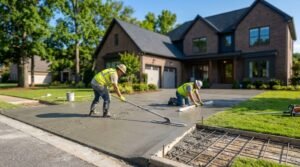
Concrete is made from cement, aggregates, and water. It creates a hard, durable surface that can complement many home styles and be finished in different colors, textures, and patterns.
Asphalt is a flexible pavement material made primarily from aggregates and a petroleum-based binder. Its dark appearance gives a traditional driveway look, and it can generally be installed relatively quickly.
Comparing the two means weighing more than the initial installation price — climate, maintenance, expected lifespan, appearance, and future repair needs all matter.
Concrete Driveway Pros and Cons
Advantages:
- Long service life when properly installed
- Low routine maintenance requirements
- Multiple finishing, color, and design options
- Light-colored surface that complements landscaping
- Strong resistance to everyday vehicle traffic
Disadvantages:
- Higher upfront installation cost in many cases
- Cracks can develop from ground movement, temperature changes, or improper installation
- Repairs can be more noticeable depending on the extent of damage
- Poor drainage or inadequate base preparation can lead to premature surface problems
Asphalt Driveway Pros and Cons
Advantages:
- Lower initial installation cost in many cases
- Faster installation compared with many concrete applications
- Smooth, dark appearance
- Straightforward repair of certain cracks and surface damage
- Flexible surface that accommodates minor ground movement
Disadvantages:
- Requires more regular maintenance than concrete
- Periodic sealing may be needed to protect the surface
- Cracks and potholes can develop if maintenance is neglected
- Surface can soften during periods of extreme heat
Asphalt vs. Concrete Driveway Cost
Cost is one of the biggest factors in this decision. Final price depends on driveway size, site preparation, grading, drainage, material thickness, accessibility, labor, and the condition of the existing surface.
Generally, asphalt tends to be lower upfront, while concrete can cost more depending on design and installation requirements. But the cheapest installation isn’t necessarily the lowest-cost option over time — factor in expected maintenance, repairs, and replacement timing before deciding. For an accurate estimate, have the property evaluated by a qualified contractor rather than relying on general online pricing.
Concrete vs. Asphalt Driveway Maintenance
Concrete maintenance generally means keeping the surface clean, addressing cracks early, and protecting the driveway from conditions that accelerate deterioration. Proper drainage matters here too, since standing water can contribute to surface problems.
Asphalt maintenance commonly includes crack repair and periodic sealing. Small cracks should be addressed before water enters the pavement and causes larger damage.
Regardless of material, good drainage, proper installation, and timely repairs significantly affect driveway performance.
Which Is the Best Driveway Material for Birmingham, AL?
There’s no single right answer for every home. Concrete tends to fit homeowners who prioritize appearance, design flexibility, and long-term durability with low routine maintenance. Asphalt tends to fit homeowners who want a cost-effective option with a traditional look and straightforward upkeep.
Properties across Birmingham, Mountain Brook, Vestavia Hills, Homewood, and Hoover can have different slope conditions soil, grading and drainage — all worth factoring in before choosing a material.
If an existing driveway has extensive cracking, potholes, drainage problems, or structural deterioration, replacement may make more sense than repeated repairs. A professional evaluation can help determine whether repair, resurfacing, or replacement is the right call.
Driveway Installation: What to Consider
Good results depend on more than choosing concrete or asphalt — proper installation starts with preparing the site correctly. A contractor should evaluate the existing surface, soil conditions, grading, drainage, dimensions, and access requirements before construction begins. Proper driveway installation and base preparation and drainage are especially important for reducing premature settlement and surface damage.
Choose concrete if your priorities are appearance, design flexibility, durability, and lower routine maintenance. Choose asphalt if your priorities are lower initial cost, quick installation, and practical traditional appeal. The right choice ultimately depends on your property’s conditions, budget, and long-term goals — a professional assessment can help you decide based on the actual needs of your property.
Frequently Asked Questions
Is concrete or asphalt better for a driveway?
Concrete is often preferred for durability, appearance, and lower routine maintenance, while asphalt can be more affordable with faster installation. The best choice depends on your property and budget.
Is an asphalt driveway cheaper than concrete?
In many cases, yes — asphalt has a lower upfront installation cost. But maintenance and future repair costs should factor into the total long-term investment.
How long do concrete and asphalt driveways last?
Both can provide many years of service when properly installed and maintained. Actual lifespan depends on installation quality, drainage, traffic, weather, soil conditions, and upkeep.
Should I repair or replace my driveway?
Minor cracks and isolated surface damage can often be repaired. Extensive cracking, major potholes, drainage problems, or widespread structural deterioration may mean replacement is the better long-term solution.
Ready to Choose the Right Driveway for Your Birmingham Home?
Choosing between concrete and asphalt is easier when you understand your property’s specific needs — drainage, grading, budget, and long-term maintenance all factor in. FARE Outdoor installs both concrete and asphalt driveways across Birmingham, Mountain Brook, Vestavia Hills, Homewood, and Hoover.
Request a free driveway estimate from FARE Outdoor and get a recommendation based on your property, not a generic online calculator.